Math worksheets are an indispensable tool for students and educators alike, offering a practical approach to reinforcing mathematical concepts. One common exercise found on these worksheets is the "Doubles plus one" problem, a simple yet powerful way to help students understand addition and number bonds.
The "Doubles plus one" strategy involves adding a number to itself (doubling it) and then adding one more. For instance, if you take the number 3, doubling it gives you 6, and then adding one more yields the final sum of 7. This method is not only easier for kids to grasp but also provides a concrete way to understand the commutative property of addition.
Understanding the "Doubles plus one" strategy
The core idea behind "Doubles plus one" is to break down the addition process into simpler steps, making it more accessible for young learners. By deceasing the problem into friendly, manageable parts, students can build a solid foundation for their understanding of addition.


This approach also lends itself well to visual representation. Teachers and parents can use base-10 blocks, ten frames, or number lines to demonstrate the "doubles plus one" concept, further reinforcing learning through multiple intelligences.
Visualizing "Doubles plus one" using base-10 blocks
Base-10 blocks provide a tactile, concrete way to represent numbers and addition. To demonstrate "Doubles plus one" using these blocks, first, students double the number by placing two of the same blocks side by side. Then, they add one more block to complete the sum.


For example, to show the equation 2 + 3, students would first place two yellow "2" blocks side by side and then add one yellow "3" block. This provides a clear visual representation of the "doubles plus one" strategy and helps students understand the relationship between the numbers.
Using ten frames to represent "Doubles plus one"
Ten frames are another useful tool for teaching "Doubles plus one". These frames consist of ten small squares, allowing students to count and represent numbers up to ten. To demonstrate the "doubles plus one" strategy, fill half of the ten frame with the number (for doubling) and then add one more to the filled side.
Returning to our 2 + 3 example, students would fill two squares on one side of the ten frame and then place three more squares on the same side. This visually represents the "Doubles plus one" strategy and helps students understand the relationship between numbers in the equation.


Applying "Doubles plus one" to various contexts
Once students have grasped the "Doubles plus one" concept, they can apply it to different scenarios, fostering a deeper understanding of addition and number bonds. By exploring various contexts, students can develop a more flexible and adaptable mindset towards mathematical problems.
For instance, students can use the "Doubles plus one" strategy to solve word problems involving measurement, time, or money. They can also create their own word problems, fostering critical thinking and problem-solving skills.
Solving measurement problems using "Doubles plus one"
Measurement problems provide an excellent opportunity for students to apply the "Doubles plus one" strategy. Students can use the strategy to solve problems involving length, weight, or capacity, fostering a greater understanding of real-world mathematical applications.


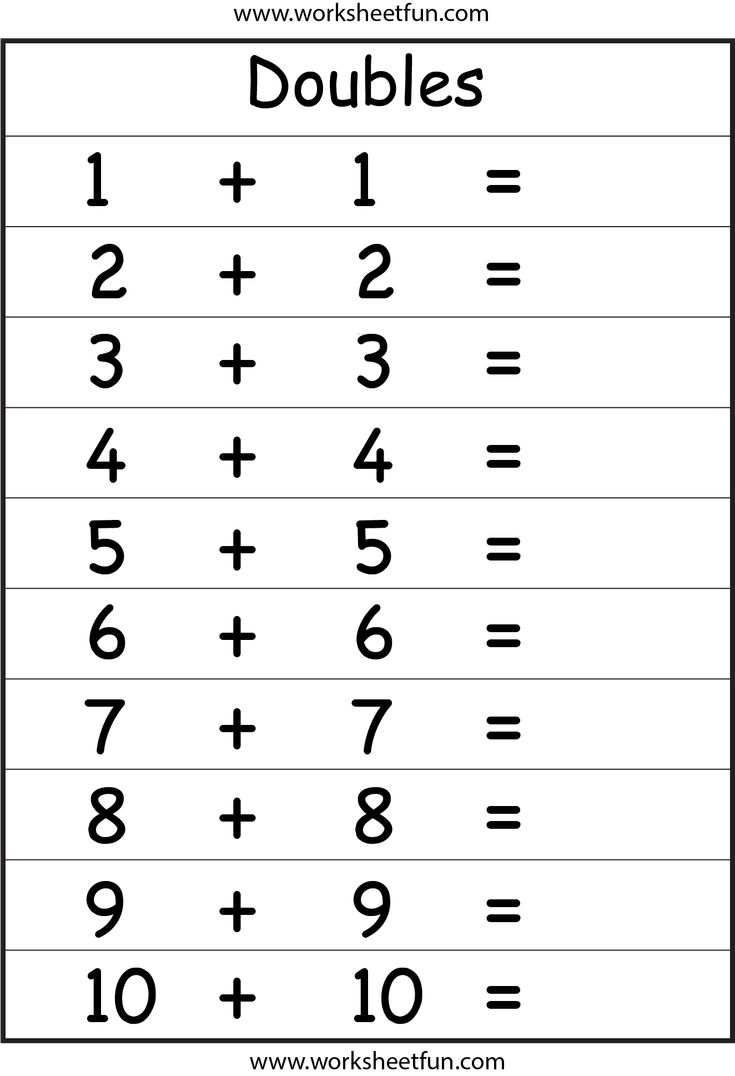
For example, if a student needs to find the total length of two pieces of wire that are 3 meters and 4 meters long, they can apply the "Doubles plus one" strategy. First, they would double the smaller number (3) to get 6, and then add one more (4) to find the total length of 10 meters.
Using "Doubles plus one" to solve time and money problems
Time and money problems are another great way for students to apply the "Doubles plus one" strategy. By solving these problems, students can develop a strong foundation in telling time and understanding basic economic principles.
For time problems, students can use the "Doubles plus one" strategy to find the total time elapsed between two events. For money problems, they can use the strategy to find the total cost of items or the change due from a purchase.
As students continue to explore the "Doubles plus one" strategy and apply it to various contexts, they will develop a deep understanding of addition and number bonds. Encourage them to ask questions, share their thoughts, and collaborate with their peers to foster a lasting appreciation for mathematics.