In the rich tapestry of Greek mythology, the Undines, also known as Oceanids, hold a fascinating position, embodying the essence of water and its willfulness. They are nymphs, daughters of Oceanus, the primordial river god, and Tethys, the Titan goddess of the sea. Let's delve into the captivating world of Undines and explore their role, attributes, and impact on ancient Greek culture and lore.
To understand the Undines, one must first grasp their origin and connection to the primordial god Oceanus. They are among the first generation of divine beings, born from the union of Oceanus and Tethys, and thus, they are primordial deities, predating the Olympians. Their name, Undine, derived from the Greek 'undos' meaning 'wave,' reflects their deep-rooted association with water and the sea. In Greek mythology, water is not merely an element but a living force, teeming with divine entities, and the Undines are among its most prominent personifications.
The Role of Undines in Greek Mythology
The Undines play a pivotal role in Greek mythology, serving as guardians and patrons of bodies of water, from rivers and seas to springs and wells. They are often depicted as beautiful, young women, sometimes with fish-like tails, additions of mermaids in later interpretations. Their role as patrons of water sources made them crucial in ancient Greek culture, as water was a precious resource, essential for life and prosperity.


Moreover, as water's embodiment, the Undines commanded immense respect and awe. They were revered for their power to control and manipulate water, a force that could bring both life and destruction. This dual nature of water, and thus the Undines, is a common theme in Greek mythology, reflecting the ancient Greeks' understanding of nature's unpredictability and the need for respect and balance in their relationship with it.
Examples of Undines in Greek Mythology
NumerousUndines appear in Greek myths, each with unique stories and characteristics. For instance, Anemone, daughter of Oceanus, was transformed into a flower by Aphrodite to shelter her illicit love with Adonis. Her story underscores the transformative power of love, a common theme in Greek mythology.


Another notable Undine is Metis, Oceanus's daughter who became the first wife of Zeus. She is an example of how the Undines, despite their primordial status, could be involved in the affairs of the Olympians, providing a link between the first and subsequent generations of divine beings.
The Undines' Connection to Water spirits in Other Mythologies
The Undines have scholarship have established connections between the Undines and similar water spirits in other mythologies. For example, the Water Nymphs of Roman mythology, the Rusalki of Slavic folklore, and the L Fédération of Norse myth share similarities with the Undines, suggesting a common, pan-human understanding of water's divine power.
These comparisons highlight the universality of certain mythical archetypes and their cultural significance. They also underscore the importance of water in human history, reflecting our profound and enduring relationship with this life-sustaining element.




The Undines in Ancient Greek Culture and Art
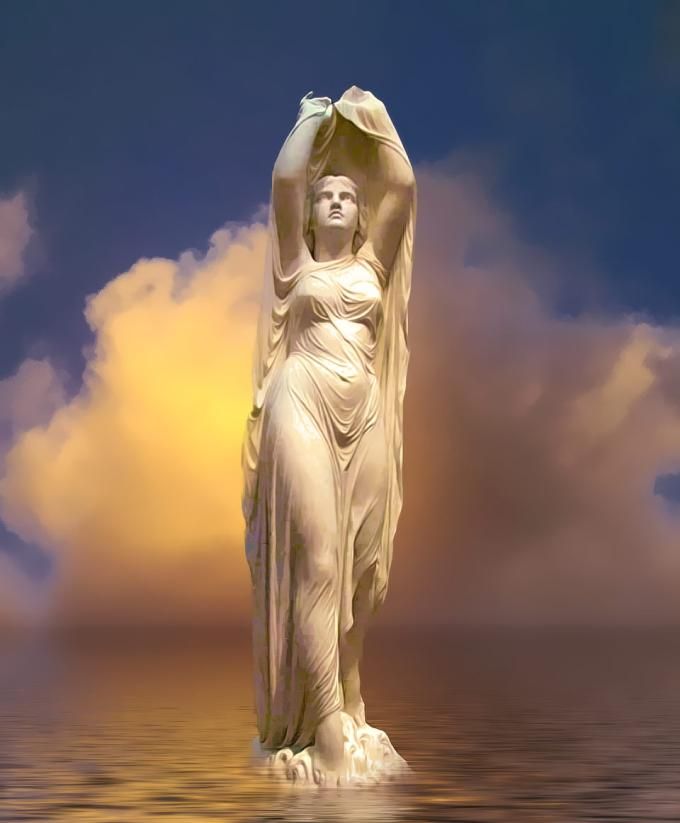
The Undines' influence extended beyond mythical narratives, permeating ancient Greek culture and art. They were often depicted in ancient Greek pottery, sculpture, and literature, serving as visual and literary motifs that encapsulate the Greek worldview.
For instance, Greek pottery, especially Attic vases, often featured images of Undines, either with human or fish-like tails, dancing, playing musical instruments, or engaging in other playful activities. These depictions highlight the Undines' role as playful, carefree beings, reflecting the Greeks' view of water as a source of pleasure and leisure.
The Greek Alphabet and the Undines
Interestingly, the Greek letter 'Omicron' (Ω, ω) is named after the Oceanids, reflecting the ancient Greeks' way of incorporating divine beings into their daily lives and culture. This connection underscores the Undines' significance in ancient Greece, as well as the Greeks' profound respect for the divine powers they believed governed their world.


The Undines, as predecessors to the Olympians and guardians of water, held a unique and significant position in Greek mythology. Their stories, attributes, and cultural influence serve as a testament to the ancient Greeks' deep understanding and respect for nature and its divine energies. Today, their legacy lives on, inspiring artists, writers, and scholars alike, as we continue to explore the timeless lessons embedded in Greek mythology.